Saturday, April 28, 2012

Peeling Back the Layers

"The Bible requires more of us than any other book."

I read this quote in a morning devotional earlier this month and have been thinking about it ever since. Its quite amazing how one book can be taken in so many different ways depending on who is reading it. Why is this?

Well, firstly, what is the Bible?


"All Scripture is God-breathed..." 2 Tim. 3:16

According to this verse, the Bible is the breath of God.


"...His name is called the Word of God." Rev 19:13

And this verse shows us that that the Word of God is Jesus Christ.


"...which Spirit is the word of God." Eph 6:17
This verse says that the Spirit also is the word of God.


So from these verses, and many more throughout the Bible, we can see that the Bible is the definition, explanation, and expression of God, Jesus Christ, and the Holy Spirit. How then, can one read the Bible and not see God, Christ or the Spirit? This question was answered last night at a Christians on Campus Thursday Night College Meeting I attended on this very subject.

One point was on opening the four layers of our being. Whether our experience reading the Bible is positive or negative depends on how many layers have been opened while reading.

The first layer is our eyes. Practically we need our eyes to be open to read the words of the Bible. This, however, is the most superficial layer and not much is gained by just merely reading the word of God.


The second layer is our mind. This layer is a bit deeper and much more complex. With our mind we can understand the Bible. However, our mind can be a bit uncontrollable at times and has the capability of going off in a million different directions. This means that there needs to be a little effort and will power to concentrate when reading the Bible so that we can understand what we are reading.


The third layer is our heart and this layer is on an even deeper level. With our heart we can receive what we read in the Bible. The heart is many times likened to the gateway of our being. When we come to the Bible with an unturned heart, it is as if we have a veil covering us (2 Cor 3:16). So how can we turn our heart and open our being to receive what we read in the Bible? We can turn our heart by loving the Lord. By loving Him, our heart is opened and we can receive the rich life supply from the Bible.


The fourth and final layer is the deepest part of all human beings. This is the human spirit. With our human spirit we can realize what we read in the Bible. The way we open this layer of our being is by genuine prayer. By praying over what we have read as a response to what the Lord has touched us with, we can pray the Word of God into us where is becomes a nourishing element to us.


This was very eye-opening to me. In my experience, I have definitely read the Bible and felt dry or lifeless afterward.  So seeing that all of the layers of my being need to be opened in order to read, understand, receive and realize God in the Bible was so helpful and practical. My hope is to have countless experiences of being in the presence of the Lord to learn and practice opening my eyes, mind, heart, and spirit to the Bible so that I may contact God in His living Word.

Friday, March 23, 2012

The Grace Received When Gathered with Others

You never truly appreciate something until after you experience what it's like living without it. Last week I was able to go home for spring break and was really looking forward to it because I hadn't been home in a long time. And much like my first experience of going home after leaving for college,  being home has become such a sweet and enjoyable time (more on why I love going home!). This time was no exception. However, there was something different about this visit for me. I felt like I was missing something that I had become accustomed to throughout my semesters at college. It turned out that this something was the necessity of gathering with other believers as a normal part of my daily Christian life.


At UT, I had become so used to gathering with believers on a regular basis at various Christians on Campus events that it hadn't occurred to me how much I needed those times. So when I went home for the break and didn't have the convenience of meeting and fellowshipping with other believers between classes or for lunch on campus, I realized how much those times really meant to me.

a meeting of believers is an exhibition of their enjoyment of Christ

Last night, at the Christians on Campus Thursday night lecture series, the topic was on The Importance of Meeting. This topic really impressed me because it clearly answered what I had experienced over my break. There were times during my break where I struggled to read the Bible by myself or to pray alone, however, when I was able to meet with other believers, I felt so refreshed and enlivened. I felt like I really experienced Matthew 18:20,

"For where there are two or three gathered into My name, there am I in their midst."


This caused me to begin to consider, what will happen to my "meeting life" after I finish college? At last night's meeting, the matter of establishing the habit of meeting with other believers while in college was emphasized. From one of the speaker's personal experience, he developed this habit of gathering with other believers while in college and believes that this is the reason why, still today, he continues this practice. This created a desire within me to pray to the Lord to establish this habit in me now, so that wherever I may find myself later in life, this habit of meeting with other believers will always be a part of my normal Christian life.


"Not abandoning our own assembling together, as the custom with some is, but exhorting one another; and so much the more as you see the day drawing near." - Hebrews 10:25

Thursday, January 26, 2012

"Science and the Bible" UT Seminar

     Last Friday, Christians on Campus hosted a seminar on "Science and the Bible." The speaker was a professor at UT, Dr. Ken Diller, who teaches in the Biomedical engineering department. The presentation he delivered was really clear and helped me align these two subjects in a proper way.


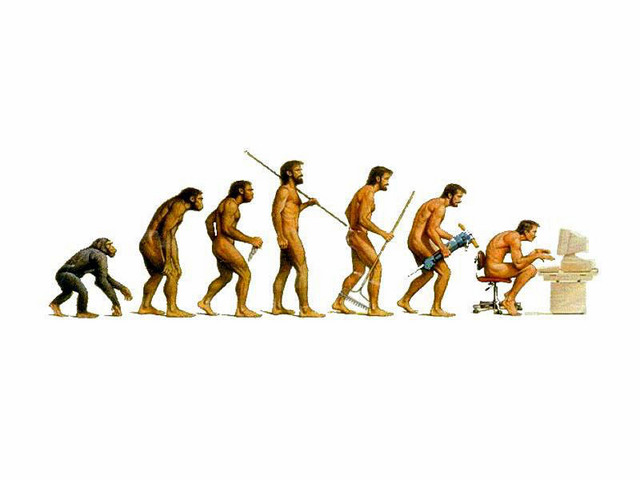
     As a student in the college of natural science, its not uncommon for me to hear a professor speak of evolution of man from apes as if it were an established fact. This can cause anyone to be a little confused and I would find myself struggling to relate what I was learning in class to my faith and belief in the Bible as the word of God. However, after hearing this lecture on "Science and the Bible," these two matters and how they relate to and exist with one another was made much more clear to me.


     The over all take-home message from this lecture was that "there's consistent harmony between verified science and the holistically interpreted Bible," meaning that when viewed as a whole, the Bible has no contention and conflict with hard, established scientific fact.

     What really impressed me from this lecture was a diagram shown which was entitled "Understanding Creation." Here, Dr. Diller, distinguished the two realms of the old creation and the new creation. In the old creation, there is science and the Bible. In the new creation there is God's purpose and God's economy. Within the old creation, science and the Bible were described as two different lines, each with a perspective, method and reason.

     On one hand, science can be described as having the perspective of the processes, meaning it focuses on how things change when altered. These processes are described by laws, equations and theories and are the subject of studies done by scientists. On the other hand, the perspective of the Bible is the purpose. If one wanted to find God's purpose for man or anything found in nature, this could not be found in science. This is only found in the Bible.

     The next point of difference along the lines of science and the Bible was the method. The method of science is concerned with the observable evidence or proof. Science is based on observable phenomena that can be measured, tested and manipulated. However, the method of the Bible is faith. As seen in Heb. 11:1, faith is concerning with things unseen.


The final point was the reason. While the reason for science is to explain the how, the reason for the Bible is to explain the why.


     After hearing this lecture, I feel a lot more at peace regarding the relationship between science and the Bible. Though there is undoubtedly many who would argue that there is great contention between science and the Bible, this stems from the mixing of the two lines or the attempt of trying to interconnect them. When we try to find purpose in science or even the processes in the Bible, we will just end up more confused and frustrated.


     So I am really thankful to have been able to see that science is where we find the processes, through means of observable proof, in order to find the how; whereas the Bible is where we can find the purpose, through means of unseen faith, in order to answer the why. To me, the purpose and why of nature and our human lives seems tremendously valuable. Therefore, I really treasure this opportunity to have learned more about how precious the word of God truly is. :)


for more on this...  here is another blog post on the same seminar :)

Tuesday, January 17, 2012

Some More Helpful Principles


... continuing from last post with some more juicy principles...


The next principle is...

"A straight line is not God's way."

     This section of the book, on not being discouraged when we fall, was the most encouraging and helpful section to me. It discusses the common experience of really loving the Lord and pursuing Him during a period of time, then inexplicably and involuntarily falling. But then being revived and pursing the Lord again and so on and so on. Though we may prefer a continuous and smooth pursuit of the Lord our entire life, God's thoughts are not our thoughts and His ways are higher than our ways (Isa. 55:8-9). It is through these experiences of failures and falls that we discover and realize that we are not dependable or consistent. And it is through these difficult situations, though they may be contrary to our preference, that God is able to work Himself into us. Though this path may seem uncertain or shaky, we need to remember that we are in the Lord's hand. So regardless to how much our situation or experience of the Lord changes, the intention behind His hand never changes! God's hand upon us has a consistent purpose from beginning to end! This was such a revelation to me! It really shows me that my thoughts and preferences are not a match to God's ways and thoughts! But  we can ask the Lord to open our eyes to know His ways so that our thoughts may be adjusted!


Though we may want a straight path, this is not God's way.


Another principle is...

"God's riches can be experienced only by those who have been defeated."

     When I read this, all I could say was wow! This point is mentioned in relation to David's great sin and failure. Through his failure, David's spirit and heart were broken. (Psa. 51:16-17). Similarly, when we fail, we become broken. However, in God's eyes, this is truly precious. God's desire is that we experience Him and enjoy Him. But if we were to be whole, with no "hole" or entrance for God, how would He enter into us? God can only accomplish His goal through our experiences of repeated failures. But of course, this doesn't mean that we purposely fail just to say that we are helping God's goal. As mentioned in the last principle, we are in God's hand and He will allow us to fall according to His ways. So there is no need to seek out failure. However, what I really enjoyed from this point is that when we do encounter failures and falls, we can realize that this is another opportunity to really gain the Lord and to allow Him to gain more ground in our being. The more we follow the Lord, and experience Him in this way, the more we will known the sweetness and preciousness of our failures and see them as God sees them.


Only through failures can we be broken so that God has a way to enter into our being.


The last principle is...

"God's unique goal for His chosen ones is to enter into them and to mingle Himself with them."

     Finally we come to God's goal. This point is so awesome! This section mentions that man's usefulness and function in relation to God are connected to his capacity to be mingled with God! So what does it mean to be mingled with God? In Genesis 1:26 we see that man was created in God's image and according to His likeness. This gives man the capacity to be mingled with God. This mingling is of two natures, human and divine. This is likened to sugar and water. A dry cube of sugar wouldn't be the most desirous form to eat sugar in, but when mixed with water, it's flavor is released. Man's human nature is like the dry sugar cube and God's divine nature is like the water. When God is put into man, the full flavor of God is manifested! But this mingling is also two-sided. God became a man, lived on the earth, died on the cross, resurrected and ascended to become the life-giving Spirit so that God could enter man. God is in every believer who has received God's salvation, however, every believer is not also in God. The proper living of God in man and man in God expresses the mingling of the two natures. When such a living is seen by man, there is a sense of both human flavor and divine flavor. This is how man can bear the flavor and scent of God and Christ! (2 Cor. 2:15)


God in man and man in God is like the mingling of sugar in water.

Thursday, January 12, 2012

Helpful Principles


     As mentioned in my last post, this winter break I've been reading a book entitled, "God's Need and God's Goal." With only one more day of reading left, I have to say that I have been so encouraged and helped through this book. It addresses many common questions and experiences we may encounter throughout our Christian lives. Some highlights included a number of principles and points that were mentioned throughout the book.


The first one is...
"God supplies us according to our need." 

     This one literally blew me away! It made me consider how naturally, I don't want to need anything or anyone, but would rather be independent and self-reliant. But how is God suppose to supply someone who believes that they need nothing? He can't! This made me realize that needing much isn't necessarily a bad thing. According to this principle, one who needs much is able to be supplied much.

To come to the Lord empty handed allows Him to supply us with Himself.


The second one is...

"Any lack that we may feel speaks of a corresponding need of God."

     This, again, was revolutionary to me! Though we may not like to think that we need much, in actuality, we need a LOT! But this is just a picture of God's great desire to fulfill all that we lack or need. It's not unheard of to hear that man needs salvation or that man needs faith, power, grace and so on. But according to this principle, this need in man reflects a need in God! Have you every considered that God's salvation needs man!? Or that God's faith, power and grace needs man to be manifested and expressed through? This was so enjoyable to see! God really does need man!

Any lack we may feel is a reflection of God's desire to fill that lack with Himself!


Another principle is... 

"Behind everything that is visible and physical, there is something that is invisible and spiritual."

     This principle was presented in the chapter concerning the spiritual significance of a new year.  This principle is truly impressive because it shows that the reality of man does not merely depend on the visible and tangible, but actually on what is invisible and intangible. So in relation to the visible and physical cycles of days, months and years, there is a invisible and spiritual reality. This reality is that God has prepared and established numerous opportunities! If we have a disappointment or failure one day, there is a new day waiting for us right around the corner.


"It is truly wonderful that we have a new opportunity every 24-hours"


... this will be continued on a following post... too much enjoyment to fit in one post! :)

Wednesday, December 28, 2011

Your need vs. God's need


"Come, for all things are now ready." - Luke 14:17

It is easy to admit that people have a lot of needs. But have you ever considered, what does God need?

We definitely could say that we have lots of needs, but so does God!


Over the winter break, I've been reading a short book entitled, "God's Need and God's Goal" by Witness Lee. Only after three and half chapters, this book has been immensely enlightening and enjoyable.

This verse, mentioned above, is a declaration of God saying that everything is ready and a call for us to come. In order to understand this, we firstly must see God's need and realize that it is greater than man's need as portrayed numerous times in the Bible.

One example is in Luke 15 with the prodigal son who left his father's house and squandered his living. There are two needs in this story, the son's and the father's. The son had worn garments, was hungry, thirsty, and filthy. The father had prepared the best robe, a ring, sandals and a feast for his son. Although the son needed the things prepared for him by his father, the father needed his son to partake of the things he prepared even more so.

Something that really touched me was that when the prodigal son returned home, there was a robe, prepared by the father, waiting for him. The son wasn't waiting for the robe or even expecting it, but robe was waiting for the son. Likewise, God has prepared everything for us and like the father, needs man to partake of all that He has accomplished and prepared for us.


So what does this mean? God needs man!

Saturday, December 17, 2011

Peanut butter truffles!

This winter break, I am spending a couple of weeks back in West Texas with my sister and her family! She is expecting her second baby girl December 24th. So I planned my trip to hopefully catch the big event :)

awesome cake someone made for the shower!


Today was her baby shower so we decided to make truffles for the occasion. I have made truffles numerous times in the past, but always the same kind with the same ingredients, strictly following the recipe. However, the way I handle food preparation and the way my sister handles food preparation are very different. On one hand, I am more by the book and like to follow the recipe's every last detail. My sister, on the other hand, being more "free-spirited" is known to make up recipes as she goes. But to my surprise, in spite of her haphazard methods, she can deliver some very tasty dishes. I always look forward to visiting her with the anticipation of eating her yummy food. :)

Although I was weary of how the truffles would turn out, they ended up coming out different from what I expected, yet wonderfully delicious. Of course, this is thanks to my sister's improvisation skills which were handy when unexpected things came up.


Here's what you need:


1) A package of Oreos

2) 1 1/2 packages of cream cheese

3) some type of chocolate that can be melted down (we used mini Reeses cups)

4) roasted peanuts


What we did:

First, using a food processor (or a large ziplock bag and something hard to pound it with) crush all of the Oreo cookies.

Then mix the cookie crumbs in with the cream cheese. Once mixed thoroughly, form about 1 inch balls and set on parchment paper on a baking sheet. (This part can be done the night before or even days in advanced) If done in advanced, store balls in Tupperware in the refrigerator.

If done the day of, place baking sheet in refrigerator to allow the balls to cool and harden and begin melting chocolate. We used the double boiler method because the condition of the chocolate we used wasn't too great, but if you use melting friendly chocolate, a microwave is much quicker.

Then dip the balls in the melted chocolate using two forks, letting the chocolate drip through the spaces and then place the chocolate covered balls back on the parchment paper. This is where it can get tricky. If you use Reeses cups, like us, the consistency of the chocolate might not be the best. We ended up having to use some elbow grease and actually manually spread the semi-solid chocolate around the balls by hand. This, of course, is not ideal, but we had to make it work.

Then, originally we intended to grind up the roasted peanuts in the food processor to use as a garnish on the top of the truffles. However, after seeing the not so pleasant appearance of the rubbed on chocolate spread, we decided to just roll the entire ball in peanut bits to just cover up any unevenness.


the finished product!


And that's about it. Although, they didn't turn out how I pictured them, they were still a hit and very yummy. They kind of looked like those Ferrero Rocher candies, but a chocolate peanut version. The cool thing about truffles is that you can really change up the filling and outside to meet your fancy. As long as it's sweet and dipped in some sort of chocolate, they will still turn out delicious.

kind of similar...